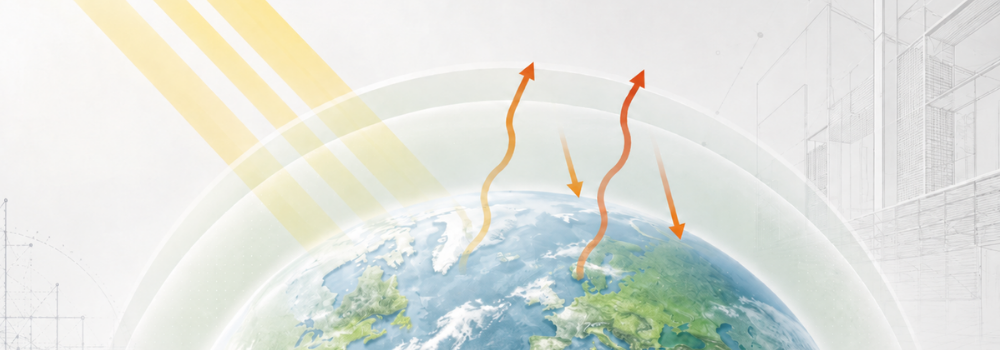
“Imagine the Earth wrapped in a big, invisible blanket.
Sunlight comes in easily, but heat trying to escape gets reflected back down. The more carbon dioxide we add into the atmosphere, the thicker that blanket becomes. As a result, the Earth holds on to more heat.”
Buildings are part of this story.
Every building needs energy to keep people comfortable, for cooling, lighting, ventilation, lifts, equipment and daily operation. None of that energy is truly free, and much of it still comes with a carbon impact. In simple terms, comfort often comes with a carbon cost.
For many years, building science has worked hard to reduce this impact. The industry has focused on better insulation, efficient cooling systems, improved building performance, renewable energy and smarter operation. These efforts are important, and they have helped reduce what we call operational carbon, the carbon produced while a building is being used.
But while we have been improving how buildings run, another part of the carbon story has gained more attention:
The carbon it takes to build them in the first place.
This is called embodied carbon.
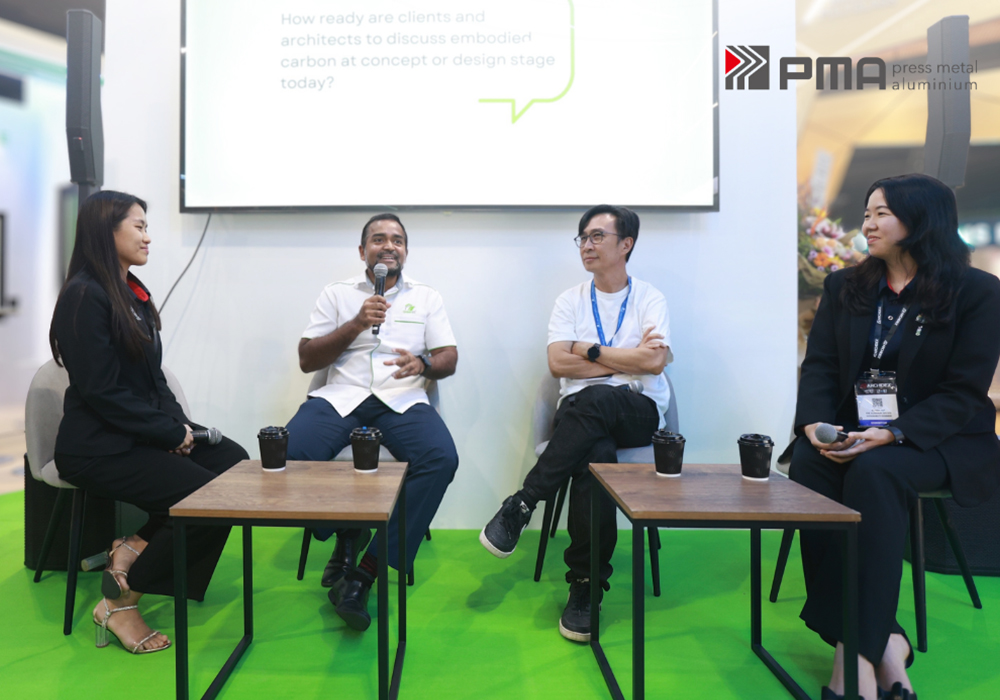
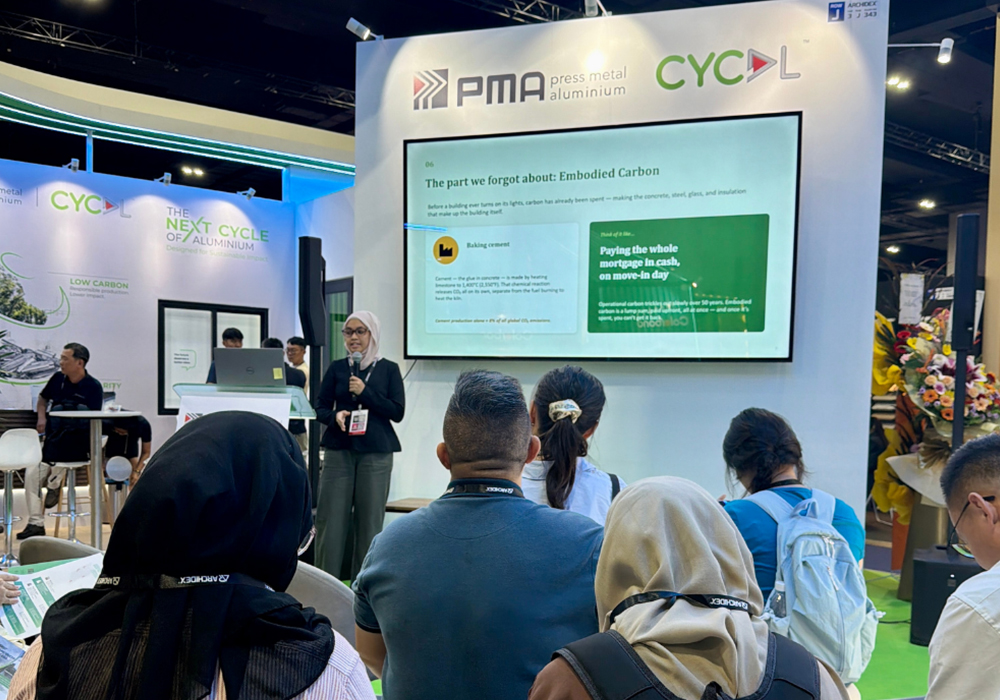
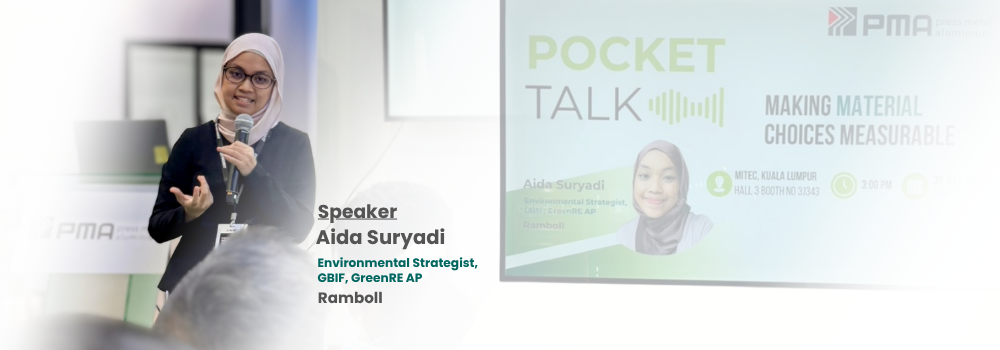
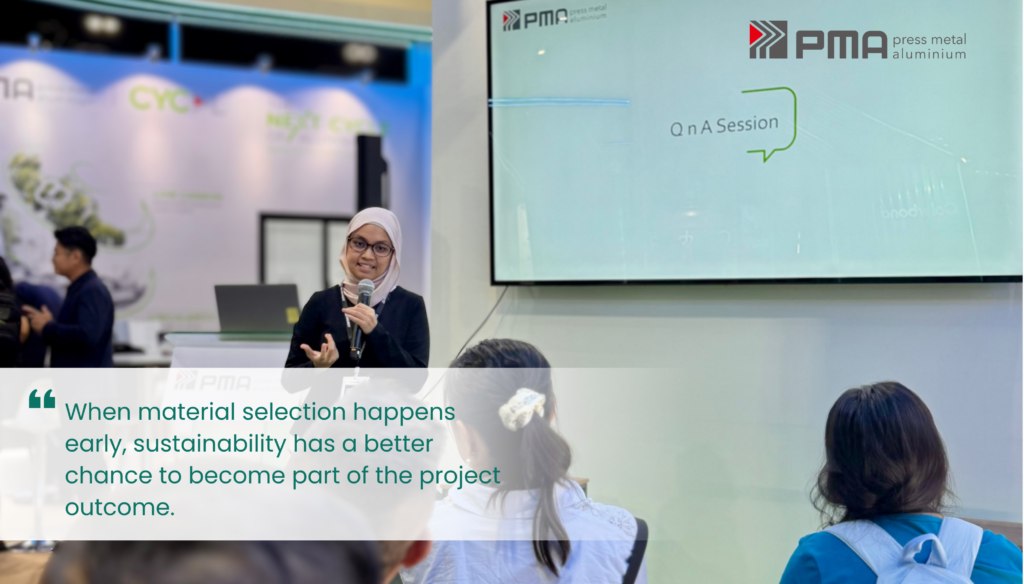
At ARCHIDEX 2026, this was the focus of PMB Aluminium’s Pocket Talk, “Making Material Choices Measurable” presented by Aida Suryadi, Environmental Strategist at Ramboll. Her session shared a consultant’s perspective on why material choices are becoming increasingly important in sustainable building design, and why better data can help project teams make better decisions earlier.
Beyond how a building run

For many years, the conversation around building carbon has focused mainly on operational carbon, the emissions produced when a building is in use, such as energy for cooling, lighting, ventilation and daily operation.
This part is easier to understand because we can see it through electricity bills, energy monitoring and building performance. With better insulation, efficient systems and renewable energy, the industry has made strong progress in reducing operational carbon.
But there is another part of the carbon story that is becoming more important: embodied carbon.
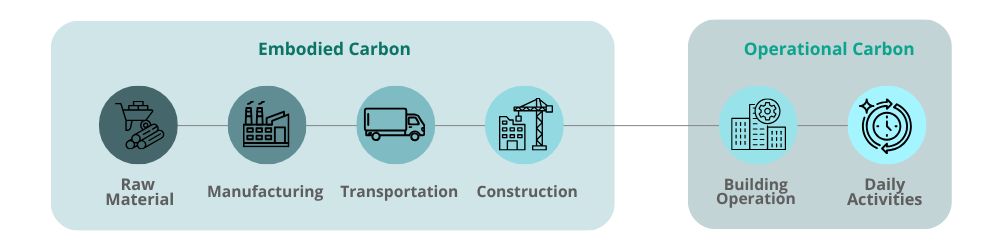
Embodied carbon refers to the emissions created before a building is even occupied. It comes from the materials we choose, how they are made, how they are transported and how they are installed.
As buildings become more efficient to operate, embodied carbon becomes a bigger part of the total lifecycle impact. That is why sustainable design can no longer focus only on how a building runs. It also needs to consider what it takes to build it.
Every material has a journey
A building material does not begin its story when it arrives at site.
Before becoming part of a building, every material goes through a journey, from raw material extraction, processing and manufacturing, to transportation, installation and use. Each step requires energy, and that energy often creates carbon emissions.
By the time a material reaches the project site, it has already carried part of its carbon story with it.
This changes the way we think about material selection. Instead of asking only:
“Which material performs best?”
Project teams should also ask:
“Which material performs well, meets project needs and carries a lower carbon impact?”
Performance, safety, cost and availability remain important. But carbon impact is becoming another factor that should be considered together with them, especially during the design stage.
Why the design stage matters
Material decisions have the strongest impact when they are made early.
At the design stage, project teams still have room to compare options, review alternatives and understand trade-offs before specifications are fixed. Once a project moves into procurement or construction, changes become harder because they may affect cost, timeline, approval and supply.
That is why material selection should not be treated as a last-minute purchasing decision. It is part of design decision-making.
When architects, consultants, developers, contractors and manufacturers discuss materials earlier, the project has a better chance to balance design intent, technical performance, cost and sustainability.
Making carbon easier to understand
One challenge with embodied carbon is that it is not visible.
Two products may look similar and perform the same function, but their carbon impact can be different depending on raw material source, manufacturing process, energy use, recycled content and supply chain.
This is where material data becomes important.
Aida shared how tools and documents such as Life Cycle Assessment and Environmental Product Declarations can help turn invisible carbon into information that project teams can understand.
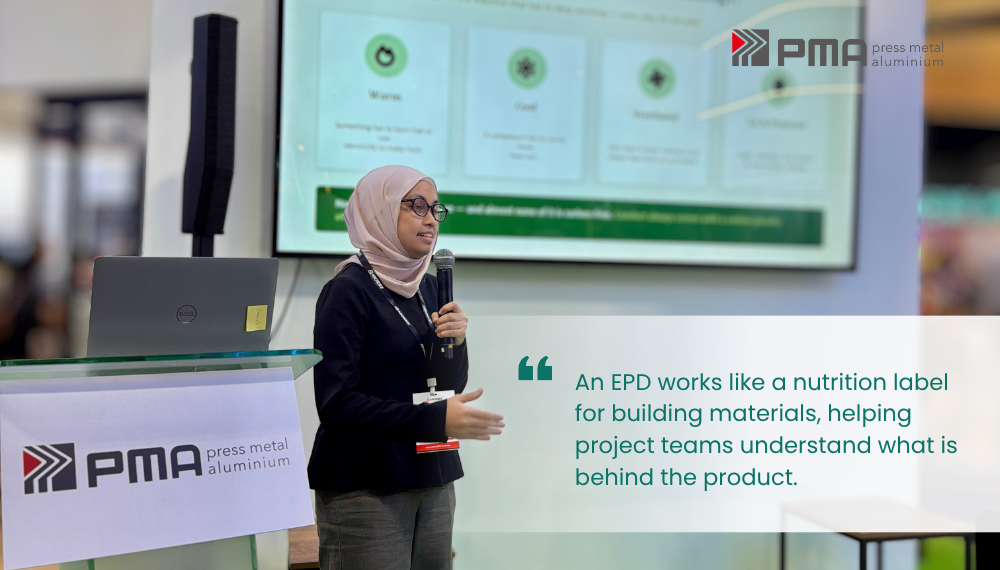
A simple way to explain an EPD is to think of it like a nutrition label for building materials. Just as a food label shows calories, sugar and protein, an EPD helps show the environmental impact behind a product, including its carbon footprint.
Once carbon has a number, it becomes easier to compare, review and improve. It can sit beside other project considerations such as cost, strength, durability, availability and timeline.
That is the real meaning of “Making Material Choices Measurable.”
Not about guilt, but better choices
The conversation around low carbon materials is not about blaming the use of certain materials.
Buildings need concrete, steel, aluminium, glass, timber and many other materials. Each material has its purpose and role in the built environment.
The better question is:
How can we choose, compare and use materials more responsibly?
When carbon becomes measurable, lower-carbon products can compete based on real data. Project teams can better understand which options offer improvement, where trade-offs exist and how material choices support the overall sustainability direction of a project.
From awareness to action
Sustainability goals are important, but goals alone are not enough.
To create real impact, they need to become decisions that can be specified, measured and implemented in actual projects.
Consultants need reliable data. Architects need practical options. Developers need solutions that support project goals. Contractors need materials that are available and buildable. Manufacturers need to provide clearer information that helps the industry make informed choices.
Through “Making Material Choices Measurable,” PMB Aluminium hopes to continue encouraging conversations that move sustainability from awareness to action.
The future of sustainable construction is not only about making buildings efficient to run.
It is also about making them more responsible to build.
And that begins with the choices we make at the design stage.