Building sustainable architectural landmarks today requires a fundamental shift in material specification – balancing environmental stewardship with uncompromising structural integrity, supply chain resilience, and rigorous green procurement benchmarks.
As operational energy efficiency improves across building lifecycles, embodied carbon accounts for a growing proportion of total emissions. Relying on traditional, carbon-intensive procurement models leaves developers exposed to a permanently locked-in carbon footprint upon project completion:
- Embodied Carbon Imperative: Unlike operational emissions, embodied carbon cannot be reduced post-construction. Early design choices dictate whole-life environmental impacts.
- CYCAL™ 80 Performance: Engineered with at least 80% recycled content, this alloy cuts production energy use by up to 95% while delivering superior strength, corrosion resistance, and finish quality.
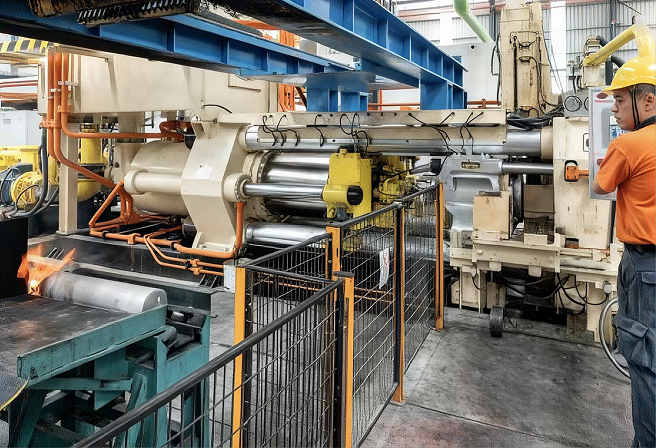
- Single-Source Integration: Consolidating extrusion, finishing, fabrication, and testing streamlines supply chains, ensures batch traceability, and guarantees quality.
- Green Framework Alignment: Verified EPDs and certifications simplify LCAs and support LEED, BREEAM, Green Mark, and EDGE compliance.
Key Takeaways
- Strategic Procurement Framework: A 5-step roadmap for converting carbon targets into enforceable tender requirements.
- Integrated Execution: How unified operations reduce supply chain risks and improve delivery timelines.
- Material Validation: Data showing how CYCAL™ 80 lowers embodied carbon without compromising structural performance or design flexibility.