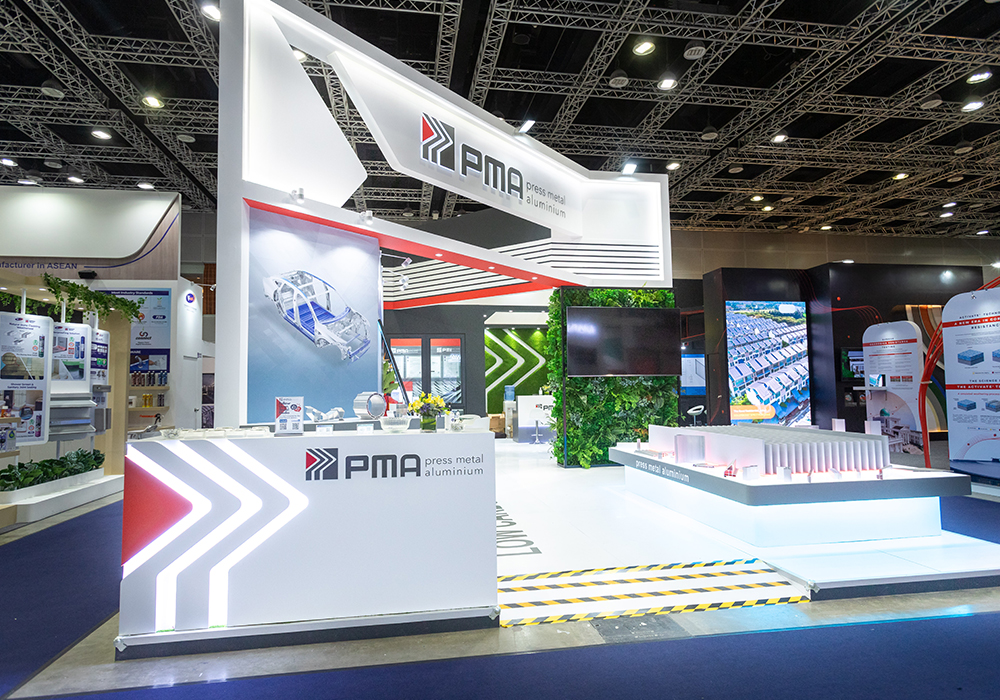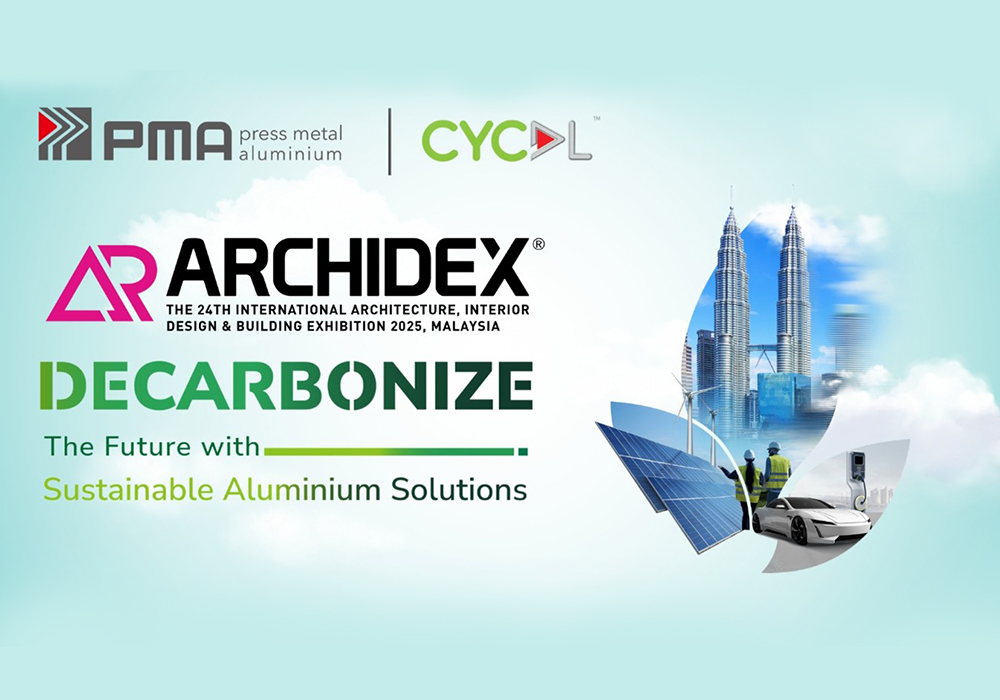
How do better decisions at design stage lead to more sustainable buildings? At ARCHIDEX 2026, PMB Aluminium brought together GreenRE and architectural practice to explore why sustainability begins long before construction starts.

That simple statement perhaps captured the essence of PMB Aluminium's first Industry Dialogue at ARCHIDEX 2026 more clearly than any technical definition of sustainability.
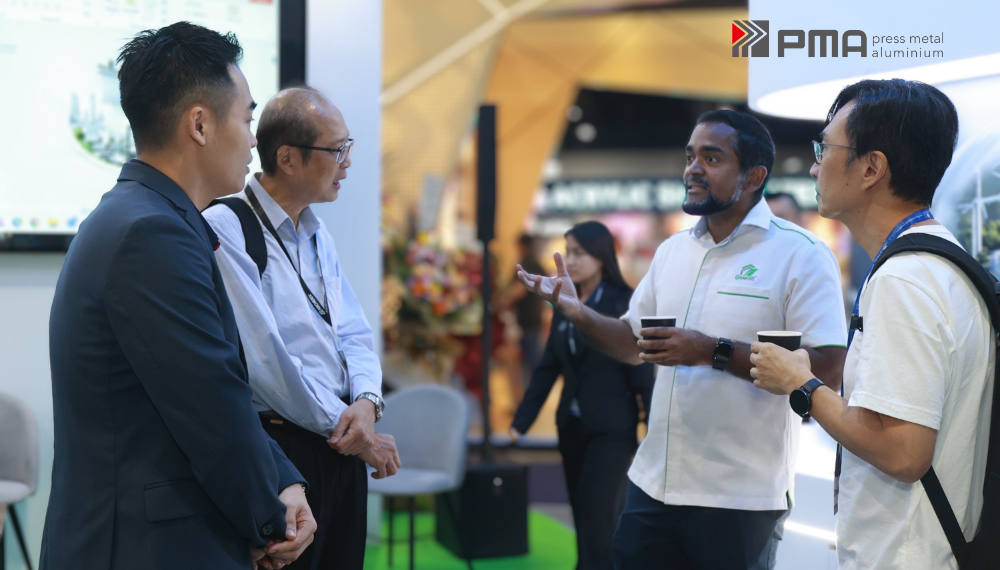
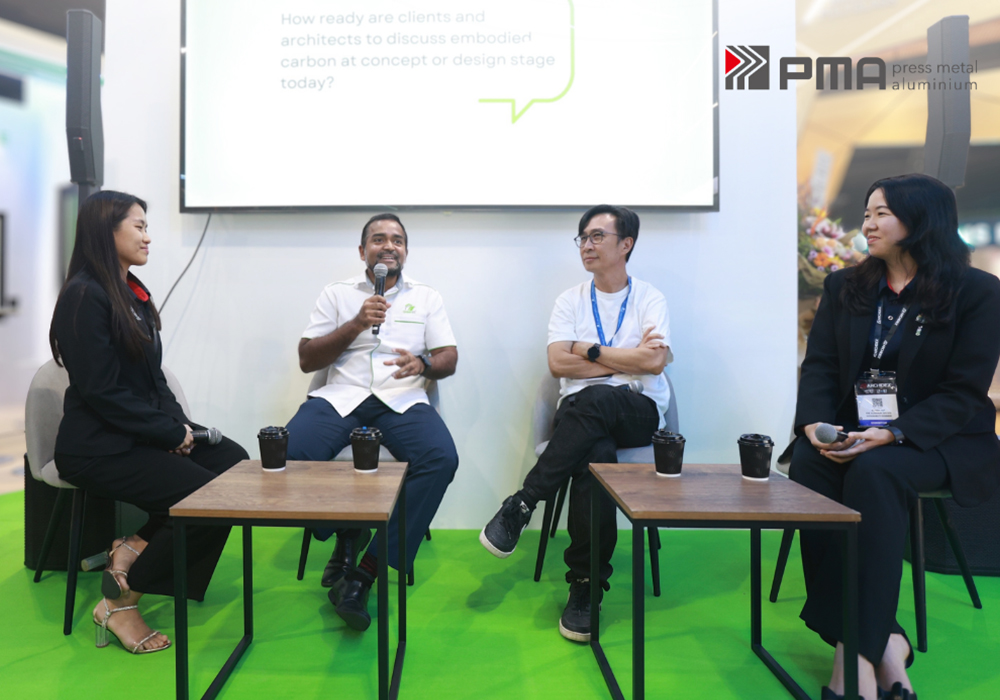
Held under the theme "The Next Cycle of Aluminium – Design for Sustainable Impact," the session brought together Ir. Ashwin Thurairajah, Executive Director of GreenRE Sdn. Bhd., and Ar. Michael Ching, Director of CH&I Architecture Sdn. Bhd. and BGreen Associates Sdn. Bhd.
The discussion was facilitated by PMB Aluminium's Sustainability Engineers, Branda Yap and Cheong P.K., who guided the conversation between GreenRE's industry framework and the Architect's practical experience, creating a dialogue that connected sustainability principles with real project applications.
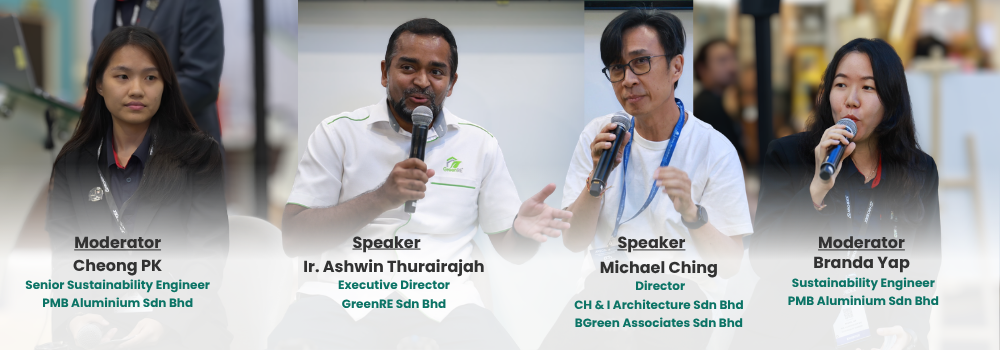
Together, the speakers explored a question that is becoming increasingly relevant across the construction industry:

Rather than discussing products or technologies in isolation, the dialogue explored how sustainability is fundamentally shaped by the decisions made at the earliest stages of a project.
Sustainability Begins with a Decision, not a Certification
The conversation opened by challenging one of the industry's common misconceptions, that sustainability is achieved by obtaining a green building certification.
Ir. Ashwin explained that GreenRE was never intended to be the end goal. Instead, it provides a framework that encourages project teams to continuously improve building performance and integrate sustainability into the way projects are conceived, designed and delivered.
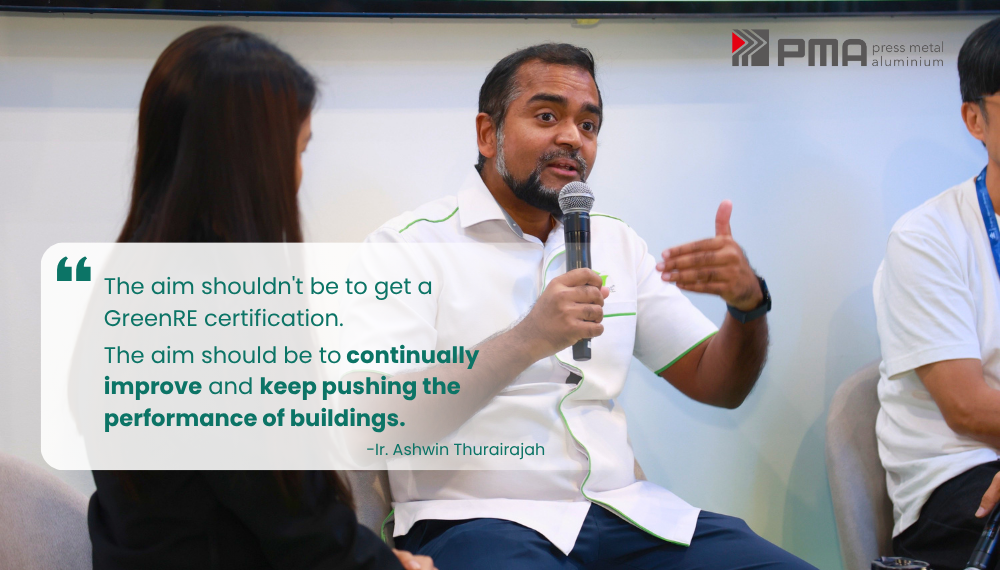
This changes the conversation entirely.
Instead of asking "How do we achieve certification?", project teams should first ask:
"How do we make better decisions from the beginning?"
Because certification is ultimately the outcome of good decisions, not the objective itself.
The Drawing Board Is Where Sustainability Has the Greatest Influence
If sustainability begins with a decision, then the most influential decision is often made before the first piece of concrete is poured.
Both speakers agreed that the design stage presents the greatest opportunity to shape a building's environmental performance. At this stage, project teams still have the flexibility to optimise layouts, select appropriate materials and evaluate lower-carbon alternatives.
Once construction begins, those opportunities rapidly diminish.
As Ir. Ashwin reminded the audience, the cheapest time to make corrections or changes is at the drawing board. We shouldn't be reactive.
From an architect's perspective, Ar. Michael shared that sustainability cannot simply be introduced at the procurement stage. Material choices, design intent, client expectations and commercial realities are all interconnected, making early collaboration essential to achieving meaningful outcomes.
The discussion also highlighted the growing importance of embodied carbon, shifting attention from how buildings operate to how they are designed and built.
The message was clear:
The earlier sustainability enters the conversation, the greater the opportunity to reduce environmental impact.
Better Decisions Require Better Information
Making sustainability part of the design process also changes the type of information project teams need.
Architects and consultants are no longer evaluating materials based only on performance, aesthetics or cost. Increasingly, they also require reliable environmental information that enables meaningful comparison between different material options.
Throughout the dialogue, both speakers emphasised the importance of transparent product data, recognised certifications, Environmental Product Declarations (EPDs) and other credible documentation that support informed decision-making.
When this information is accessible and trusted, sustainability becomes another design consideration, not an afterthought.
Rather than asking,
"Will this material perform?"
Project teams are increasingly asking,
"What impact will this material have throughout the building's lifecycle?"
This shift represents one of the industry's most significant changes in recent years.
From Better Buildings to Better Markets
While sustainability is becoming a stronger priority, Ar. Michael also reminded the audience that successful projects must remain commercially viable.
Developers, architects and consultants constantly balance environmental aspirations with investment decisions, client expectations and long-term value.
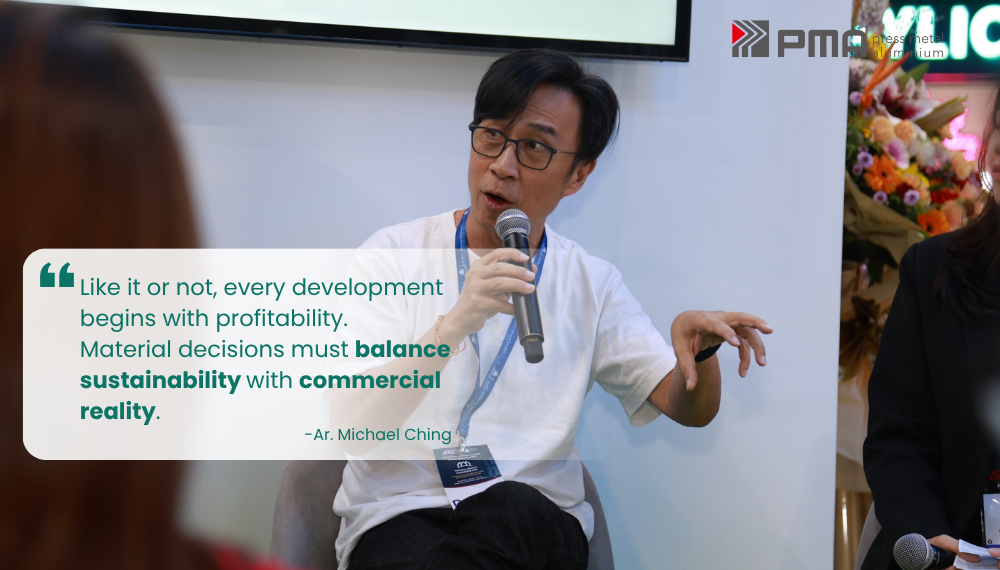
Yet he also offered an optimistic perspective on how sustainable markets evolve.
As more developers adopt sustainable materials, demand increases, manufacturing scales up and costs gradually become more competitive, making sustainable choices increasingly accessible across the industry.
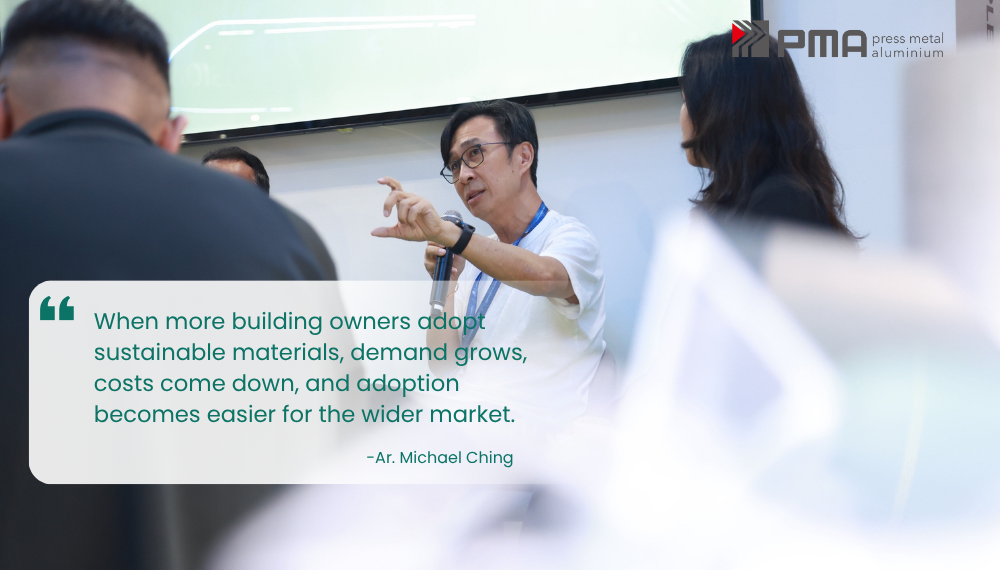
The discussion reinforced that accelerating green building development requires more than innovation alone. It depends on collaboration between developers, architects, consultants, manufacturers, certification bodies and policymakers, each contributing to a more informed and connected value chain.
Sometimes the Most Sustainable Solution Is Also the Simplest
One of the dialogue's most thought-provoking moments came when the discussion turned to embodied carbon.
Instead of asking what more could be added to make a building sustainable, Ir. Ashwin encouraged the audience to reconsider whether additional complexity was necessary at all.
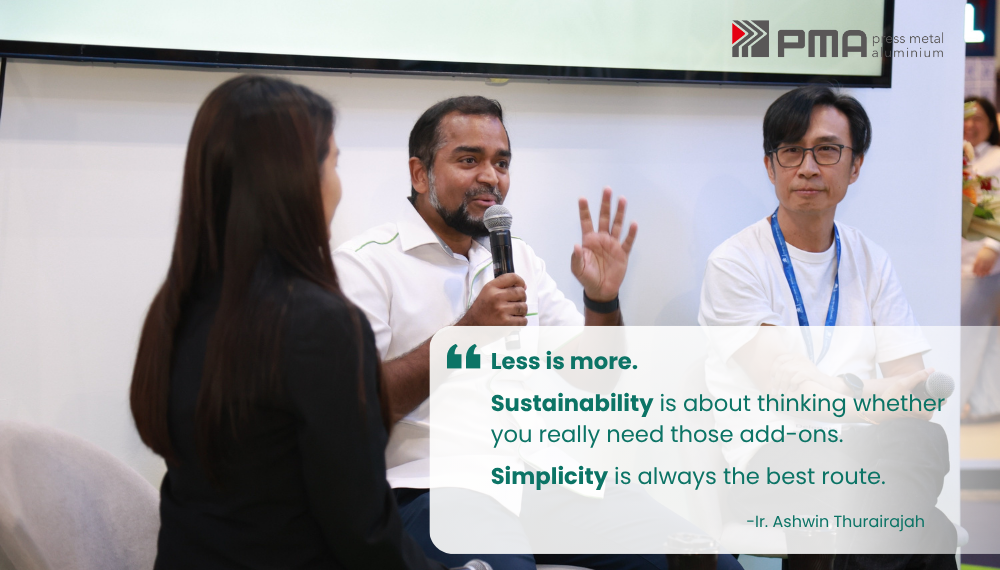
It was a reminder that sustainability is not always achieved by adding more technologies or features. Often, it comes from designing more thoughtfully, reducing unnecessary complexity and making smarter decisions from the outset.
Designing the Next Cycle Together
The Industry Dialogue reflected PMB Aluminium's commitment to creating conversations that extend beyond materials and towards meaningful industry progress.
The discussion demonstrated that sustainable buildings are not created by one certification, one technology or one material.
They are created through thousands of informed decisions, supported by transparent information, practical collaboration and a shared commitment to continuous improvement.
That is also the thinking behind The Next Cycle of Aluminium – Design for Sustainable Impact.
It is not simply about producing lower-carbon aluminium.
It is about enabling better decisions.
Because better decisions lead to better material choices.
Better material choices lead to lower-carbon buildings.
And every sustainable building starts with a decision.